Meet Eric Zehnder | Language Theorist and Quote Master
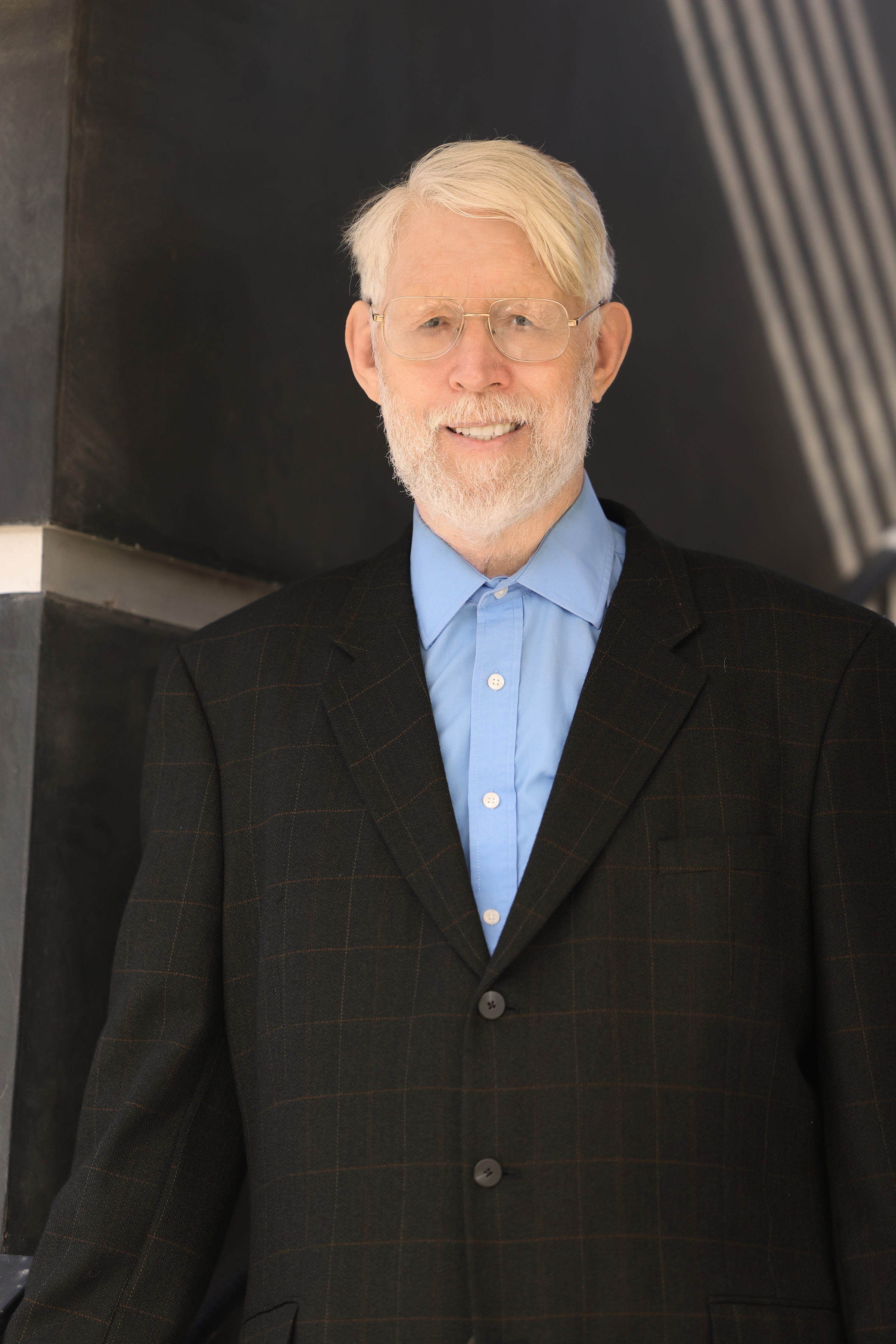


We had the good fortune of connecting with Eric Zehnder and we’ve shared our conversation below.
Hi Eric, what led you to pursuing a creative path professionally?
Once a pastor looked me in the eye, as if he saw something deep. He asked me, “Would you rather be ordinary with no pains, or extraordinary with pains?”
I didn’t hesitate: I wanted to be extraordinary.
Do not ask for an easy life, ask for a great life.
My father and I were two master builders in our family. We built many houses and complexes – bought the land, capped the oil wells, designed the dwelling, ran the crews,
took it to fine finish.
There’s something very substantial in being a true masterbuilder. There’s something about taking raw land from the earth and creativity from your mind and turning them into a
3-D fine building.
I never made less than in the top 2% in California.
But I have something else that was even greater:
My mother set me on her knee and taught me to read at age 3. She taught me the speed read. She taught me to enjoy wonderful stories.
Like Mark Twain, I was born with a love of language. But mother taught me that language was for rich human-to-human interaction. With language came curious thoughts expressed, going back-and-forth, seeing how your language made someone laugh, or something beautiful happen. There was celebration for both effort and gift.
That’s culture.
Out of culture came ART – which was turned into greater beauty in our buildings. Which in turn sold for much more. Please don’t think
the richness of culture doesn’t create riches in many dimensions. Also – beauty creates JOY.
It inspires giftedness. It inspires someone to pursue their gift to the fullest and most intense extent.
My great gift was the love of language. I didn’t make it up. No human gave it to me. No institution or system downloaded it in me.
God put it in me. That’s the only way to account for how it got there.
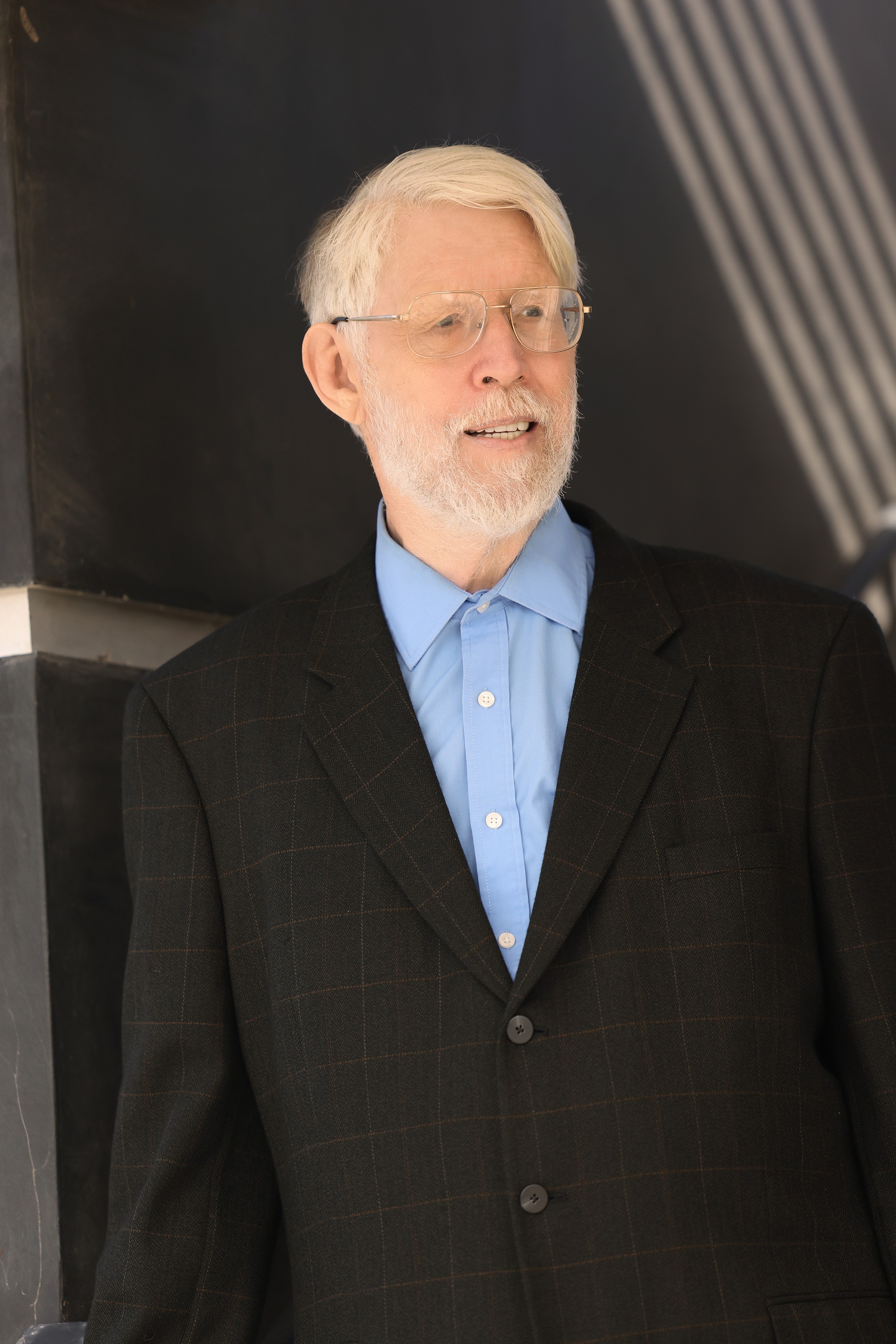
Alright, so let’s move onto what keeps you busy professionally?
When I was a boy, the family would go on vacations and travel afar. I loved going to national parks because I really loved nature, but but whenever we went through a sizable town or city I would badger my parents to take me to an independent bookstore.
By age 12, I had my own thousand book library.
Show you how much I really loved language intentionally, from age 12 to age 13, for one full year… I hand copied every word, grammar notation, and definition in the 3000 page Noah Webster’s dictionary. Wrote it out by pencil. Enjoyed every moment of it.
I eventually settled on to great goals with language:
At age 17, I decided that I wanted to be the greatest quote writer of all time. I was introduced to Coach John Wooden, the greatest of college basketball coaches, at age 13.
Everyone knows basketball knows his name. But you know that he was the fifth greatest writer of quotes in American literary history.
I heard him use his catchy coach with his great basketball teams. He said the singular quote was the seed of the singular life, play, or effort.
Likewise he said that votes were made for players was very short attention spans.
Right on there, I decided that if I could write a good quote day, that people actually enjoy and also, that would be good writing.
Now I am the Quote(-writer)GOAT. I have written 25,000 quotes. For comparison, only two great writers in history of written as many as 4000 – King Solomon and Ralph Waldo Emerson.
In substance and style, in quantity and quality, in an essay, I believe I am the true literary heir of Emerson.
But aged 20, significantly due to my special studies under Dr. Lewis Froman at the University of California Irvine, I want to become best at something else – the best in fundamental, or, central, language theory.
I’m there.
It took 50 years to get there.
That part wasn’t a gift, that was a trek.
But I’m there. With it comes the mastery of universal principles through geometrical shapes, upper band with language versus lower band with language… and understanding the difference between OPEN BODY SYSTEM AI AND CLOSED BODY SYSTEM AI.
On the average one great writer writes one great contribution to fundamental language theory every two centuries.
It is a rare gift – but it will turn out to be critical to the best programming of AI.
I leave the reader with these quotes on language:
Language not only explores your world, it expand it.
Language is part of the fabric of reality, not a human fabrication.
Language richness in vocabulary and conversation is the greatest cause an indicator of intelligence.
Where there is great new language there is a great new frontier.
Where a great new frontier is opening there is also great new language and great new concepts.
Any places to eat or things to do that you can share with our readers? If they have a friend visiting town, what are some spots they could take them to?
My home town is Huntington Beach, and if I weren’t severely impaired, I would be sure to take my best friend to every stretch of beach in the city limits, making certain they get extensive surf lessons in the town known the world over as Surf City. There are no shortage of exciting restaurants and venues throughout the downtown area, along Main Street as it leads directly into the world-famous Huntington Beach pier. My out-of-town guest could have their pick of casual beachside bar to swanky upscale dining and all points in between. Huntington Harbour (yes, with the English spelling of the word), is a great place to pick up a boat for tour of the coastline and nearby fishing venues. Hiking and nature trails throughout the Huntington Beach marshland are a must as well. Interesting locals I would introduce include the members of the current Huntington Beach city council who each have quite a story to tell.
Who else deserves some credit and recognition?
I was Roland Bainton’s last student, born out of season as it were. I lived with him until he died. For seven decades he was a lion at Yale, a renowned scholar, the great biographer of Martin Luther. And of Erasmus. When he would send me to his office, there were 3000 volumes of scholarship and commentary on Luther on one side of the wall, and there on the other, were 3000 more on Erasmus!
But even more than these, – his students know this – he was the greatest church historian of his time, perhaps of any time. History was my scholarly forte, and I was welcomed into the boxes and boxes of typed out lectures, which he had kept back through his first years. I would say I received a goodly immersion in history.
But Roland taught me a great deal more than that. I was his servant more than his student. And I received more than teaching. Roland himself was the gift and the engine behind all the many accomplishments he achieved. He was an amazingly obedient person, living a rigorous life throughout his tenure. He often ate only a handful of nuts and raisins at lunch and dinner during his months of research in order to keep pressing on and on. He had, however, a wonderful openness and joy, which I think akin to Luther’s own. He had a good heart – and sharp – kind, but sharp – eyes to see beyond the images. It came across in his lectures to the students and other audiences. I think we received far more than teaching. I think we received part of the very life of the people he taught us about. He played his role in passing on a lineage with his life.
Dr. Bainton was, by anyone’s standards, a master. He could read – and lecture in – twelve languages. He wrote million-seller, scholarly yet eminently readable texts. He loved and followed the lives of his students. We had a box of over 2000 names, chiefly of former students, whom he kept some degree of correspondence with. He was the great footnote writer. He showed the letters of exchange between himself and Catholic scholars during the period when his biography of Luther came out. Some of these were vitriolic. Yet in the records of exchange, Roland never replied in kind. Instead, he very carefully footnoted all his replies, and spoke with grace. Finally the head librarian at the Vatican wrote to him and said, to the effect, “You have shown us a great deal about Luther that we didn’t know.”
His openness of heart led him to look into and speak well of – but never sloppily – many denominations and outstanding persons. Roland himself was what I call a second-mile personage – a person who not only embodies discipline and doggedness, but also mastery and lived out vision. Most of the denominations he looked into had second-mile personages, often lots of them. Most of them developed sterling individuals, both male and female – Roland was one of the first biographers to call notable women from the centuries to our attention – who spanned religious and secular mastery.
https://archives.yale.edu/agents/people/69637
Website: https://quantumriver.world/
Image Credits
Pete Van Rensburg, RIP