Meet John Thomas Dodson | Orchestral Conductor and Mindfulness Teacher
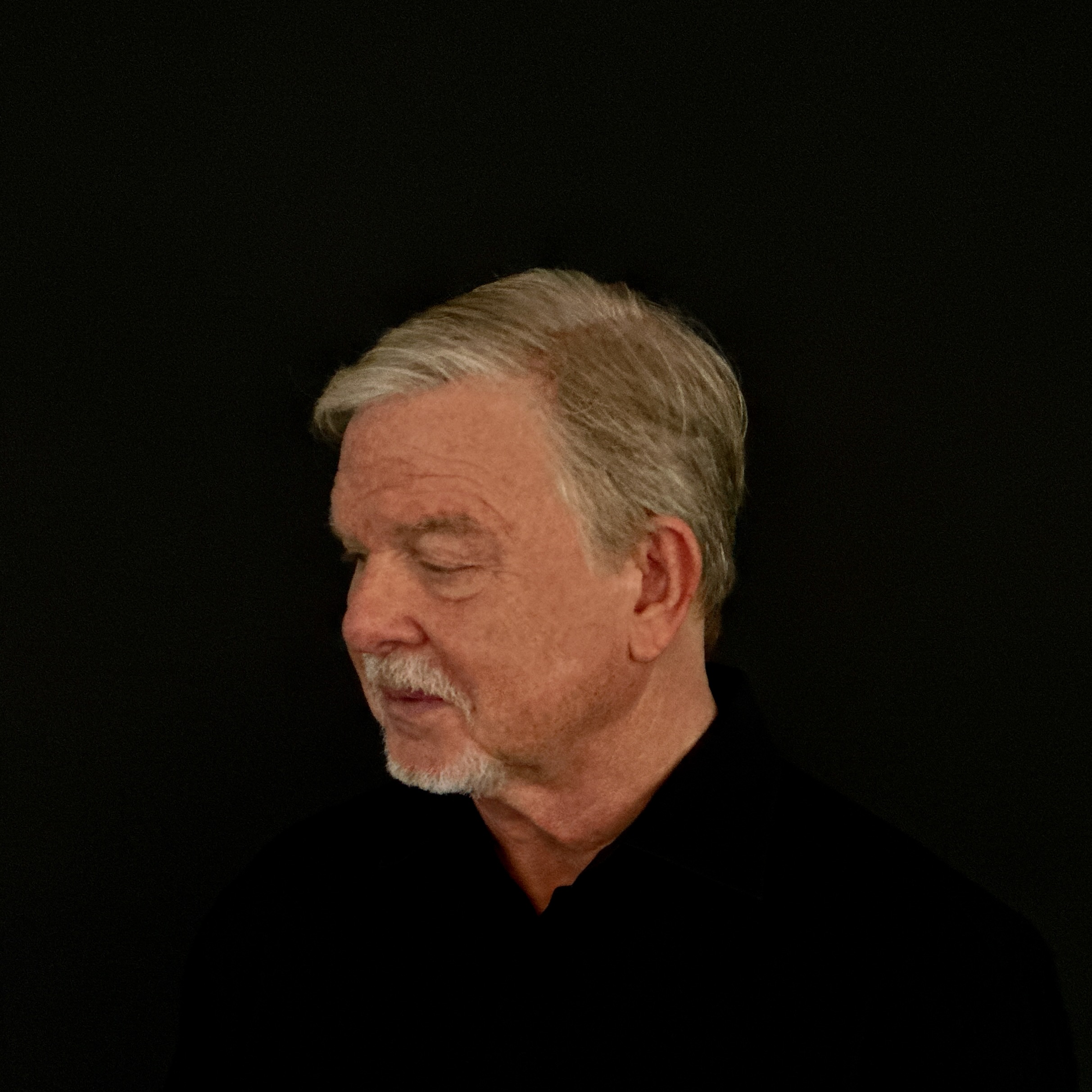


We had the good fortune of connecting with John Thomas Dodson and we’ve shared our conversation below.
Hi John Thomas, is there something that you feel is most responsible for your success?
Of course, “success” can mean a lot of things, but the way I read the question was not in terms of outward success, but the inward aspect.
So, what is the factor? As musicians, we all chase the highest forms of excellence, but it’s not quite as simple as it might appear.
I remember two moments that initially pointed toward the way for me when I was quite young. Both focused on achieving a very high skill level. When I was first studying music, one of my teachers cautioned me to focus on truly finishing the work I was in. He said something like, “This isn’t just about putting in the time and thinking that you punched a card and deserve a reward. It’s about discovering your outer limits and, over time, seeing that level rise alongside your skills and understandings.”
The other moment came when I was in college. I had a student worker job in the university library, and my boss told me she had graduated with a 4.0 – a record of only A’s. When I asked her how she did that, she answered that, when she studied, she simply didn’t accept anything less than having mastered the material. She was relentless about that – not giving up until she had truly understood the lesson: Complete mastery was the goal, and anything less was unacceptable.
So both of them were saying, “You have to get really good at this!” And that was the first lesson I had in achieving success.
But then a dimension arose that I hadn’t seen at the beginning. It was psychological, and it had a big impact on me – taking years to work out. And that dimension was in confusing excellence with perfection.
It’s easy to get stuck if you think you have to be perfect. In our music lessons the teacher would even talk about “perfect practice” – going over a passage until you were absolutely sure you could perform it with no mistakes. That confidence in our ability to perform “perfectly” – even under high levels of stress is what we seek. But we can get sidetracked. There is a difference between seeking excellence and the practicing perfectionism. It grows out of a misunderstanding of why we are chasing this very high level in the first place. Probably all of us who are trying to do something extremely well can get hooked by perfectionism. I certainly did – and sometimes still can – at least until I notice it’s happening. So, how do we work toward excellence and not become a perfectionist?
Part of the answer is to look at our motivation. Am I sharing something I love (excellence) or protecting myself from criticism (perfectionism). It really becomes a choice between love or fear.
Neither of those choices have anything to do with the level of artistry, but each choice leads to a different path, a different life, a different version of what we call “success.” One is generous – sharing your gift, while the other is filled with dread – the deep-seated fear of being discovered as a flawed human being.
The years have helped me with this issue. If I think of being gifted as having a gift to give away, then I’m in the generosity mode. But if I operate from a fear of failure, perfectionism will take over, and that’s a terrible way to live a life. In perfectionism, my gift isn’t serving anything but my insecurities. In the sharing mode, it’s directed toward the receiver of the gift.
So, yes, the teacher and the boss were both right about rising to your highest potential, but over time I learned that none of it matters if you’re operating out of the wrong intention.
Seeing the root of why you’re doing what you’re doing is its own form of healing.

Let’s talk shop? Tell us more about your career, what can you share with our community?
From my childhood years, music was always a part of my life. All of my siblings played musical instruments, and my parents were both musical as well. Music was so present that I didn’t give it much thought as a life direction until I was in my teens. By then I was composing and even beginning to conduct as well as playing instruments and singing.
There were mentors that appeared along the way. The American composer, Robert Jager, took me as a student for five years, and, decades later I recorded much of his orchestral music in Russia for the Naxos label. I was accepted as a conducting student at Peabody Institute of the Johns Hopkins University, studying with the great pedagogue, Frederik Prausnitz, and later was a conducting fellow as the Aspen Music School under the French conductor, Paul Vermel. All of those people and institutions were very important to me because they formed my earliest understandings of music and established a level of excellence that was just expected as part and parcel of being in this field.
As my conducting activities grew, I lived across the United States, conducting orchestras in Arizona, New York, Tennessee, Michigan, and Georgia. I spent three years as a cover conductor with the St. Louis Symphony and a senior member of the orchestra mentored me by having me spend time with various staff members of the organization – from the librarian up I got to look under the hood of one of the great orchestras in this country. Those years were like getting a second master of music degree!
Then guest conducting opportunities came in the United States, Mexico, the Caribbean, Europe and Russia. Anytime I could, I would continue to learn, attending rehearsals of great orchestras like the New York Philharmonic, Detroit Symphony, and the Cleveland Orchestra. Since I was collaborating with soloists who had worked with some of the great musicians of our time, between rehearsals, I would always ask them to tell me about those experiences. They would describe some of the things they took away from those opportunities – which meant that they could teach me things THEY had learned from master conductors like Karajan, Gergiev and Haitink. I was lucky to be able to spend time with great composers like Copland, Bernstein, Husa, Bright Sheng, Michael Dougherty and Christopher Theofanidis. Even now, I can hardly believe that I met such people – truly some of the great creative voices in American music. Sometimes I would learn from other fields too – I spent three years with a modern dance colony, and through that experience met great choreographers like Martha Graham, Paul Taylor and Anna Sokolow. So you could say I’ve had many teachers. There’s always a chance to learn if you’re opening up to the opportunities hiding within the situation right in front of you.
My life has always been a mix of professional conducting and the education of emerging musicians. I’ve taught students at high schools, colleges and universities, and conducted symphony orchestras as well as opera and ballet productions. That mix has been wonderful for me because the younger musicians are so open and willing, while the professionals set such a high standard for themselves that we get to test our limits as artists exploring the great repertoire. At Oberlin and here in Atlanta with the Chopin Academy, I have been able to teach mindfulness for musicians – helping students work through issues of performance anxiety, maintain concentration on stage, and play at a very high level under very stressful circumstances. I was really grateful to be invited to coach mindfulness to over twenty young pianists who were going to perform at Carnegie Hall. And now I teach classes in the Humanities and music at Gwinnett Technical College here in Atlanta.
In the Dominican Republic, I served as Artistic Director of Conciertos de la Villa de Santo Domingo and worked with a great foundation there. That work has involved leading concerts in the Colonial City, a UNESCO World Heritage site, and also establishing an educational program for teaching young Dominicans how to play the instruments and the music corresponding to the age of the buildings there. We’ve brought the musicians into contact with Early Music specialists from North and South America, donated historical instruments, set up performance opportunities in historic settings and helped them move forward with their professional careers. Some are teaching, some are studying internally, and all are performing. It’s been a remarkable experience!
And then there is a project involving the great composer, Johann Sebastian Bach. I’ve been the Music Director of a Bach festival north of Detroit Michigan for the past decade. He is, of course, the very summit of music for all of us, and it has been one of the joys of my life to get to lead concerts of his music, to learn from great artists involved in the festival, and to collaborate with some of the best orchestral and vocal musicians between Chicago, Detroit and Cleveland.
Lastly, more recently, I’ve been invited to work with two orchestras in Cleveland and Atlanta whose members are adults but not professionals. Those experiences have had an enormous impact on me. The Cleveland Women’s Orchestra is the last orchestra of its kind in the country, founded ninety years ago, and I worked with them before and during the pandemic. It was a difficult time for many arts organizations, and made even more difficult for the CWO with the death of their long-time music director. So we made concerts and opera together for several seasons, and the day came when they could finally announce their new music director. I thought I was finished with that aspect of my career, and then, in mid-afternoon, the phone rang with a call from Amy Ross of the Atlanta Community Symphony Orchestra. Her mother had been in the Cleveland group and she said, “I need you to do something like that with us.” I’m still enjoying working with them as their Principal Guest Conductor, while Robert Trocina is doing very good work as their Music Director. It is an orchestra made up of doctors and lawyers, teachers and nurses, professors and medical researchers, all of whom also make music. The love they show to the music and to each other has been quite something to behold. I’m so glad that aspect of this field has come into my life. I spent many decades working with professionals, which was my life’s goal, but honestly, something important would have been missing in my life without those experiences in Cleveland and here in Atlanta.
And I continue to compose, so the creative side remains active. I’m grateful for all of it.
Any places to eat or things to do that you can share with our readers? If they have a friend visiting town, what are some spots they could take them to?
Musically, I would take them to Spivey Hall. It’s a small recital on the Clayton State University campus – about half an hour south of the city. Spivey Hall has some of the best acoustics in the world. They invite musicians you would expect to find in the greatest venues in the world, and yet, in Spivey you can listen to them in a close, ideal setting. There is a wide variety of artists who perform there, from the best classical soloists to jazz masters to world-renowned chamber music ensembles. It is cultural gem!
For restaurants, I would take them to experience the Persian cuisine at Delbar and the seafood at The Optimist.
For something unusual, I would take them to hear jazz jam sessions with Joe Gransden at Napoleon’s on Monday nights. It’s so much fun hearing people go up and perform without a moment of rehearsal. You have some bar food, enjoy a drink and listen to performers from eighteen to eighty! I’ve taken so many people there and everyone has had a great time! There’s nothing quite like it.

Who else deserves some credit and recognition?
This is a great way to begin! Yes, I would like to dedicate this shoutout to the leadership of the Chopin Society of Atlanta. Founded by Dorota Lato, the society just celebrated its twenty-fifth anniversary. For a quarter of a century it is been bringing great artists here and supporting the musical education of a generation of young pianists. Dorota and her husband, the esteemed pianist, Piotr Folkert, have taken young pianists around the world, supporting performances and masterclasses in New York, Vienna, Paris and beyond. They’ve been an inspiration to me, and I’ve been honored to become involved in their organization as a conductor and mindfulness teacher.
Website: johnthomasdodson.com; mindfulnessforperformers.com
Linkedin: https://www.linkedin.com/in/john-thomas-dodson-86894711
Youtube: www.youtube.com/@johnthomasdodson, https://www.youtube.com/@conciertosdelavilla