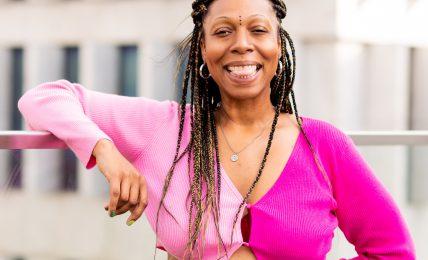
Meet Natasha Riley, LPC, CPCS | Clinical Director



We had the good fortune of connecting with Natasha Riley, LPC, CPCS and we’ve shared our conversation below.
Hi Natasha, what was your thought process behind starting your own business?
To be completely honest, I never set out to be a business owner. I valued security—the steady paycheck, the predictable two weeks of vacation. But the pandemic made me question what security really meant. I realized I wanted something deeper: the ability to live life on my terms and design work that aligned with my values, not just my schedule.
I started JIWS as a solo practitioner in 2020, but after about three years of doing everything myself, I had a moment of clarity: I didn’t want to be a therapist forever. I wanted to build something bigger than my individual practice—something that could outlast my direct client work and create meaningful impact at scale.
That’s when my vision evolved. I began asking: What if we could create a practice that supports the high-achieving Black woman through every season of her life? From navigating career success while feeling disconnected inside, to deepening intimacy in relationships, to processing grief, to managing the emotional complexity of fertility and building a family.
Now, JIWS isn’t just my practice—it’s a holistic ecosystem of support. As our clients transition and evolve through life, they always have a home here with therapists who understand their unique experiences. That’s the business I’m building: one that creates lasting impact, not just income.

Alright, so for those in our community who might not be familiar with your business, can you tell us more?
What Sets JIWS Apart:
JIWS is a virtual therapy practice exclusively serving high-achieving Black women, couples, and families. What sets us apart is our understanding that success doesn’t automatically translate to satisfaction. Many of our clients look accomplished on paper—thriving careers, strong relationships, impressive achievements—but internally, they’re exhausted, overthinking everything, and disconnected from what they actually want.
We specialize in helping them break what I call ‘inherited survival scripts’—generational patterns of putting everyone else first, staying busy to prove their worth, and disconnecting from their own desires. Our approach is holistic and culturally responsive, meaning we address not just the symptoms of burnout or relationship strain, but the root patterns that create them in the first place.
We also meet clients across their entire life journey. Whether someone needs individual therapy to navigate career transitions, couples therapy to deepen intimacy, or specialized support around fertility and maternal health—they have a home here. That continuity of care is rare in mental health, especially for Black women.
What I’m Most Proud Of:
I’m most proud of two things.
First, we’ve created a practice where Black women don’t have to explain themselves. They don’t have to educate their therapist about cultural context or code-switch to feel heard. Our clients stay with us for 6+ months on average because they finally have a space where they can show up fully and be met with both expertise and understanding.
But second—and this might surprise people—I’m incredibly proud of what happens for our clinicians. We don’t just hire therapists to fill caseloads. We create an environment where they learn about themselves while supporting our clients. Many of our therapists come to JIWS working through their own versions of the patterns we treat—people-pleasing, overachieving, disconnection from their desires. Being part of this practice becomes part of their own healing journey.
We have clinical supervision built in, we prioritize culturally responsive care, and we model the boundaries and sustainability we teach our clients. I’m building a practice where therapists can thrive, not just survive. And honestly, that’s rare in this field.
How I Got Here (The Real Story):
Getting here wasn’t easy, and I’d be lying if I said it was. I started JIWS in 2020 as a solo practitioner working out of survival mode myself—trying to build something while hosting a podcast, and managing all the business operations alone.
The first major challenge was mindset. I had to unlearn the exact patterns I help my clients break—the ‘I have to do everything myself’ mentality, the guilt around charging what I’m worth, the fear that slowing down means failure. I was burnt out trying to prove I could handle it all.
The second challenge was financial. Businesses take awhile to go from red to black, it’s hard operating in the red. There were quarters where expenses significantly outpaced revenue, and I had to make tough decisions—like letting go of therapists who weren’t ready to build caseloads, cutting marketing spend that wasn’t converting, and getting really honest about what was actually moving the needle versus what just made me feel busy.
The third challenge—and this one surprised me—was learning to lead a team. Hiring therapists meant I wasn’t just responsible for my own clients anymore. I had to create systems, provide clinical supervision, manage different personalities and work styles, and hold people accountable while also supporting their growth. That required a completely different skill set than being a great therapist.
How I Overcame These Challenges:
I overcame them by doing three things consistently:
First, I got help. I hired a virtual assistant to handle content creation. I brought on a clinical supervisor so I wasn’t carrying all the clinical oversight alone. I stopped trying to be the hero of my own story and started building a team.
Second, I got ruthlessly focused on what actually drives revenue. I cut out tasks that made me feel productive but didn’t fill therapist caseloads. I created a ‘Daily CEO Power Hour’—just 50 to 60 minutes a day—where I focus exclusively on partnership outreach, lead nurture, and strategic decisions. That discipline has been everything.
Third, I practiced what I preach. I couldn’t tell clients to set boundaries while ignoring my own. I couldn’t help them break survival patterns while running my business in survival mode. So I reduced my own client load, implemented systems that protect my energy, and got honest about what sustainable growth actually looks like.
Lessons I’ve Learned:
The biggest lesson is that growth doesn’t require grinding. For years, I thought I had to hustle harder, post more, do more to succeed. But what actually moved the business forward was doing less—but doing it strategically.
I learned that partnerships and organic relationships generate better clients than paid ads ever did. I learned that one great therapist fully utilized is better than three underutilized ones. I learned that my highest value as CEO isn’t in the therapy room—it’s in creating the conditions for other excellent therapists to thrive.
I also learned that clients don’t buy services—they buy transformation. When I shifted our messaging from ‘we provide therapy’ to ‘we help you transform external success into internal satisfaction,’ everything changed. People don’t want another appointment on their calendar. They want their life to feel as good as it looks.
What I Want the World to Know:
I want the world to know that JIWS exists because Black women deserve more than survival. We deserve to thrive on our own terms—not by following scripts that were never designed for our flourishing.
I also want people to know that we’re building something bigger than a therapy practice. My long-term vision includes training other practitioners, hosting retreats, and writing a book.
And honestly? I want other Black women entrepreneurs to know that you don’t have to have it all figured out to start. You don’t have to be perfect to be profitable. You don’t have to sacrifice yourself to be successful. I’m living proof that you can build a business that honors both your ambition and your authenticity.

Any places to eat or things to do that you can share with our readers? If they have a friend visiting town, what are some spots they could take them to?
I’ll be honest—I’m a homebody at heart. Most of my free time is spent recharging at home, not out exploring the city. But when I do venture out, I’m all about live experiences that feel energizing without being draining.
If my best friend came to visit, we’d hit up whatever concert, festival, or fair is happening that week. Atlanta always has something going on—whether it’s a music festival at Piedmont Park, the Sweet Auburn SpringFest, or a concert at State Farm Arena. I love the energy of live events where you can just be present, enjoy good music, and soak up the atmosphere.
Beyond that, we’d probably spend time at some of my favorite low-key spots—brunch somewhere with good vibes (I’m not picky, just good food and good conversation), maybe catch a movie, and honestly? A lot of quality time at my place just talking, laughing, and resting.
For me, the best time doesn’t mean packed schedules. It means presence, good energy, and doing things that feel nourishing instead of exhausting. That’s what I’d want my best friend to experience—the Atlanta I actually live in, not the tourist version.

Who else deserves some credit and recognition?
I think the biggest help has been joining The Private Practice Academy hosted by Dr. Ajita Robinson. I’ve been able to go in and the fill the gaps I had when I was doing everything on my own. It’s been so helpful to have actual people to ask answer my questions or just sort through my thought process.
Website: https://www.javerywellness.com
Instagram: https://www.instagram.com/@javerywellness
Linkedin: https://www.linkedin.com/in/natasha-chentille/
Youtube: https://www.youtube.com/@JaveryWellness
Other: https://open.spotify.com/show/2nQUSLZ4lCGMxILzdhj9v2?si=72b48c32cafe419b